
Litecoin is a relatively young asset in the cryptocurrency market. Every day, this instrument is used by more and more users, from ordinary miners to exchange traders. This material will help you thoroughly understand the functioning and existence of this tool.
What is Litecoin
By its nature, Litecoin is a fork of Bitcoin with its own features. The currency is an alternative to the most well-known cryptographic asset, combining the functionality of a peer-to-peer payment system. This allows transfers from one wallet to another within a single global infrastructure. Litecoin is a fully independent payment instrument and can be accepted both for online transactions and at offline points. The creator of the system is Charles Lee, a former Google employee.
Users first learned about these coins in 2011. At that time, the creators pointed out that the main feature of Litecoin is its open-source code. This allows anyone interested to suggest improvements to existing algorithms and create their own payment assets based on current developments, which has become quite common recently.
Like its predecessor, Litecoin has the status of a decentralized asset. You can become the owner of a single coin either by exchanging it for cash or by mining.
The official website has existed and functioned almost since the coins appeared on the market. As with other cryptocurrencies, every user can view the current mining difficulty for one unit of the asset. There, you can also find out the exchange rate and its dynamic changes. If needed, experienced users of the tool, whom you can find in the community section of the official site, are always ready to help new owners.
Technical indicators
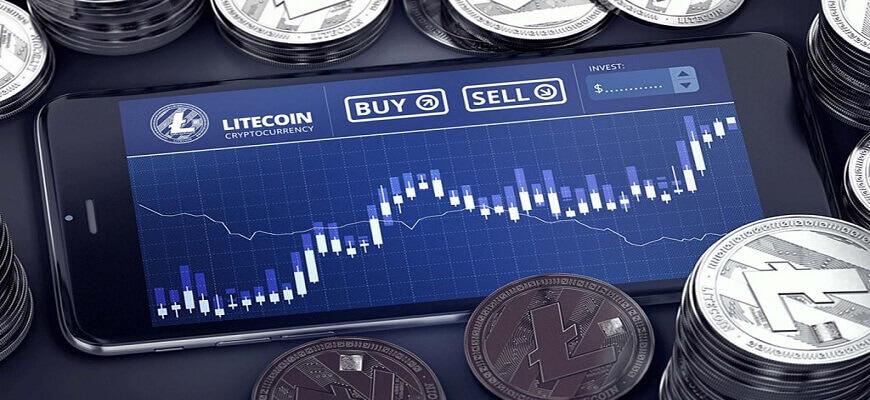
Currently, the total market capitalization of coins is about 3 billion dollars. As of September 2020, 65 million coins are in circulation, and the price of one coin is $48.
Litecoin reached break-even point in 2017, when the cost of mining one coin became positive and attractive to users. The same period marks the peak of its popularity, with a maximum price of $267 per coin.
At the current rate (September 2020), considering electricity costs and equipment expenses, mining on physical hardware is unprofitable for ordinary users. Cloud mining services have gained popularity, and more so — cryptocurrency trading on exchanges.
How does Litecoin differ from its parent, Bitcoin
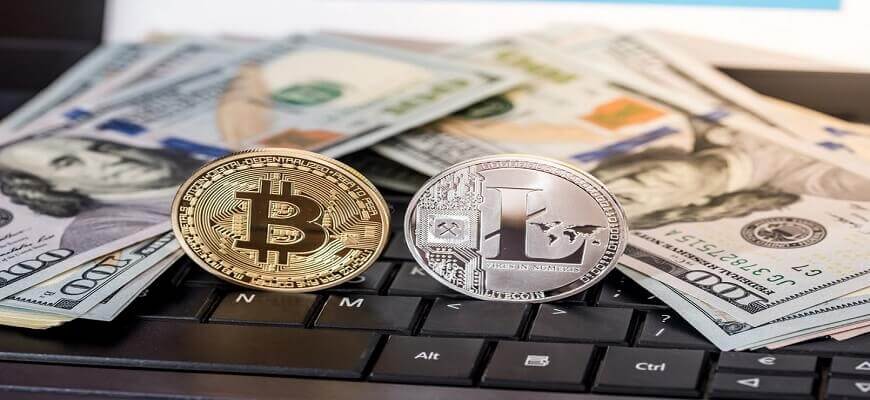
Despite many similarities between Bitcoin and its fork, the cryptocurrency Litecoin, there are significant differences:
- Different hashing principles. Although the block search algorithm is the same, Litecoin uses the Scrypt function, whereas Bitcoin uses SHA-256.
- Due to serialization of calculations, the asset is less demanding on mining equipment. For beginners, this means the cost of mining one unit of currency is lower compared to Bitcoin.
- All transactions are conducted using 33-character addresses starting with the digit 3 or the letter L.
- One block is mined approximately every 2.5 minutes, while Bitcoin takes four times longer.
- The total number of coins is 84 million, which is four times more than Bitcoin.
Where to buy
Token purchase is only possible on specialized exchanges. The price on each platform depends not only on the market rate but also on the set commission percentage.
The most well-known and attractive exchanges for ordinary users are:
- Binance. The leading platform with the highest daily liquidity volume (simply put — turnover). Offers one of the most favorable commissions — 0.1%, which actively attracts new clients.
- Bitmex. Considered the most reliable. During its operation, there have been no cases of unauthorized access to user funds through this exchange.
- Huobi. Ranks third among leading cryptocurrency exchanges. It is the most international, providing services to clients in 13 major languages worldwide. Around ten billion USD of client funds are traded on the platform.
Another way to acquire Litecoin is to buy it through specialized exchange services. These organizations are even more numerous than exchanges, and the difference lies in the final purchase price and the range of accepted payment methods. When converted to rubles, exchange rates of banks through which transactions pass are most often used.
Advantages and disadvantages of the currency
Like most crypto tokens, Litecoin has its unique advantages and disadvantages compared to other similar assets. Knowing them will be useful for anyone planning to use this instrument in daily life. Positive features include:
- High scalability. Litecoin possesses all the capabilities of fiat money (unbacked funds) and can be used as a fully independent payment means.
- Small block generation time. This is a significant advantage, especially for mining.
- As an infrastructure with open-source code, it is easier to modify than Bitcoin. Therefore, the development prospects of this tool seem more long-term and sustainable.
However, the currency also has its drawbacks:
- “Linking” to precious metals. Linking Litecoin to silver is just as deceptive as Bitcoin to gold. Unlike stablecoins (tokens with a fixed peg to fiat), these tools lack a single organization responsible for maintaining parity.
- High mining costs. This refers to the cost of mining coins, which strongly depends on the current market situation. It is impossible to say definitively whether mining will be profitable. As of September 2020, trading on exchanges might be more profitable.
- Open-source code is as dangerous as it is useful. Having free access to Litecoin’s technical side, hacker groups can exploit vulnerabilities found in the code.
- Its popularity largely depends on its market value. If the price drops further, tokens might become uninteresting to both traders and miners.
- Unstable exchange rate. Although this is common for almost all cryptographic tools, Litecoin’s user interest varies strongly with price changes. This results in no stability in forecasting the development prospects of this asset.
Conclusion
According to experts, the only real advantage of Litecoin at the moment is its fast block calculation speed. Its value dependence on Bitcoin’s price will continue for a long time until Litecoin finds its niche in the cryptocurrency top. As an investment, buying Litecoin is not recommended now, but as an asset for short-term trading on market fluctuations, tokens are quite suitable.